Festivals & Traditions
Cambodia Water Festival (Bon Om Touk): Meaning and Traditions
Boat races, river traditions, and the changing flow of the Tonle Sap
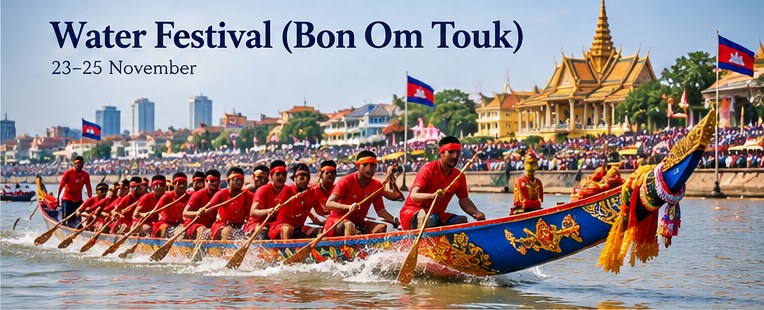
Bon Om Touk, commonly called Cambodia’s Water Festival, is one of the country’s best-known annual celebrations. It is associated with the seasonal reversal of the Tonle Sap River’s flow, the end of the rainy season, boat races, and gatherings along riverside areas. Dates follow the Cambodian calendar and can change each year; check the official holiday schedule before making plans.
1. Why the Tonle Sap flow matters
During the rainy season, water from the Mekong helps fill Tonle Sap Lake. As water levels and river conditions change later in the year, the Tonle Sap River reverses direction and flows back toward the Mekong. This seasonal cycle is central to the festival’s cultural meaning and to the region’s ecology and livelihoods.
2. Traditional boat races
Long, decorated racing boats and teams from different communities are a highlight of the festival. Crowds gather to watch races and cheer for their teams. Race schedules, routes, and safety arrangements depend on the year and local organizers.
3. Moon worship and illuminated floats
Festival traditions can include paying respect to the full moon and the harvest, as well as illuminated boats or floats and evening festivities. Customs vary by place and family, so no single program represents every Cambodian community.
4. Tips for visitors
Arrive early for popular riverside areas, use official transport and event guidance, keep children close in crowds, carry water, and plan for road closures. Avoid entering the river or restricted race zones, and verify dates before booking travel.
Planning note: Public holiday calendars and event arrangements can change. Confirm the current year’s dates and official notices before planning travel or relying on a closure.
How the Tonle Sap River changes direction
The Water Festival is closely linked to a striking feature of Cambodia’s waterways. During the rainy season, heavy monsoon rainfall raises the level of the Mekong. Water is pushed into the Tonle Sap River and lake system, causing the river’s flow to reverse and the lake to expand substantially. As the rainy season ends and Mekong water levels fall, the Tonle Sap River begins flowing back toward the Mekong. This seasonal cycle supports a rich freshwater ecosystem and has shaped livelihoods around fishing, farming, and transport.
The festival brings this natural cycle into public view, but it is not simply a celebration of a river. It also reflects how closely Cambodian life has long been connected to water, seasonal weather, food production, and shared community work. The precise river conditions depend on rainfall and other environmental factors, so the timing of the natural reversal should not be treated as identical every year.
Boat races, teamwork, and community identity
Longboat racing is one of the festival’s best-known features. Teams train together and row in rhythm, often representing a community, institution, or province. The boats may be decorated, and spectators gather along riverbanks to cheer. The races are both a competition and a public display of coordination, endurance, and cooperation.
Although Phnom Penh’s riverside celebrations attract substantial attention, water-related festivities and boat races may also take place in other communities. The scale and program vary by location and year. A cancelled or shortened program does not change the festival’s cultural significance, and visitors should always check current announcements before travelling.
Moon observances and traditional foods
Bon Om Touk is often discussed alongside moon-related traditions such as Sampeah Preah Khe and the preparation of ambok, or flattened rice. In some families, ambok is served with ingredients such as banana and coconut. These customs connect the celebration with the harvest season, gratitude, and hopes for well-being. Practices differ between households and communities, so a short guide cannot represent every local tradition.
Evening activities may include illuminated boats and public gatherings near the water. These scenes can be memorable, but they also draw crowds. Visitors should keep to public viewing areas, follow event staff instructions, and avoid restricted river zones or boat-launch areas.
Practical advice for visiting during the festival
If you plan to visit Phnom Penh, check the official dates, transport updates, and event announcements before booking. Popular riverfront areas can become crowded, and some streets may be closed to vehicles. Arriving early can make it easier to find a safe viewing place. Agree on a meeting point if travelling with family or friends, keep children close, and bring drinking water and weather-appropriate clothing.
Do not assume that fireworks, boat races, concerts, or every other activity will happen every year. Public programs can change because of safety, weather, or official decisions. Use local authority guidance for road closures and safety arrangements, and avoid entering the river or restricted zones to take photographs.
Why the Water Festival matters beyond tourism
The festival offers a chance to learn about the relationship between people and the Tonle Sap–Mekong system. The lake and river support fisheries, agriculture, transport, and communities whose daily routines respond to changing water levels. Understanding this context makes the festival more meaningful than viewing it only as a large public event.
Visitors can show respect by learning a little about the traditions before attending, following local guidance, disposing of rubbish responsibly, and recognizing that the river is a working ecosystem as well as a place for celebration.
Sources and further reading
- Cambodia Ministry of Tourism: Festivals — overview of the Water and Moon Festival and seasonal river flow.
- Tourism Cambodia: Visit Cambodia’s Water Festival — explanation of the Tonle Sap flow reversal and festival traditions.
- Cambodia Ministry of Tourism: Tonle Sap — background on the lake and its importance to local livelihoods.
Use official announcements for current dates and event details; general descriptions of the festival do not confirm the program for a particular year.
Related articles
Frequently asked questions
When is Bon Om Touk held?
It usually takes place around the full moon of the Buddhist month of Kadeuk, often in November, but the dates vary by year.
Why is it called the Water Festival?
It is closely associated with the seasonal reversal of the Tonle Sap River and celebrations around the waterways.
Are boat races held every year?
Boat races are a central tradition, but the actual event program can vary; check official announcements for the current year.
Explore more: Cambodian Public Holidays · Coronation Day · Khmer Calendar
← Back to the MyBirthSign Blog